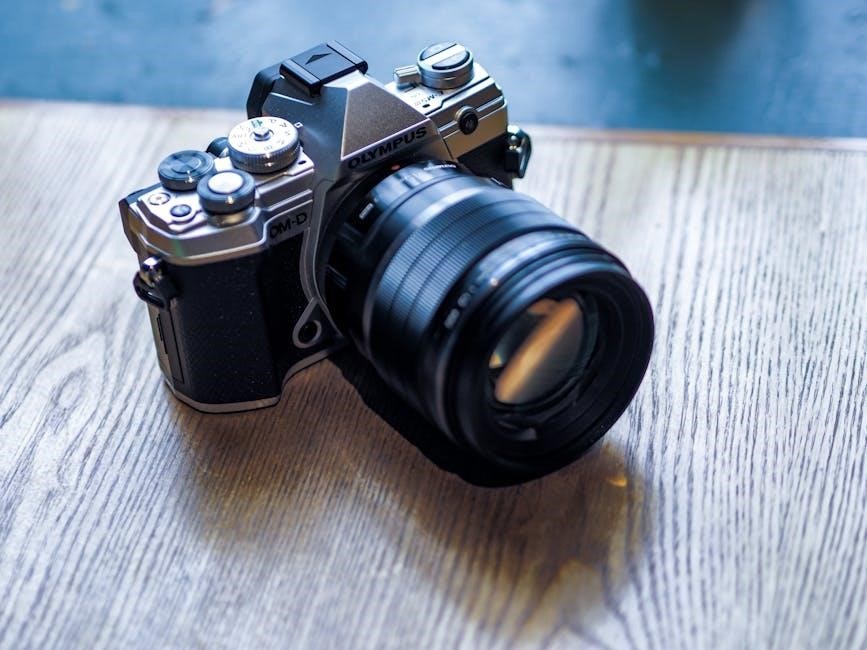
Olympus OM-1 Manual: A Comprehensive Guide
Welcome! This guide details the OM System OM-1, the inaugural camera from OM Digital Solutions, formerly Olympus. It represents a pivotal shift, blending legacy with innovation.
The OM System OM-1 marks a significant moment in photographic history, representing the first camera released under the new OM Digital Solutions banner following the sale of Olympus’s imaging division in 2020. This isn’t merely a rebranding; it’s a continuation of a renowned legacy, carrying the weight of the iconic OM-1 model number from the film era.
Positioned as a flagship model, the OM-1 aims to deliver professional-grade performance within a remarkably compact Micro Four Thirds system. It’s a camera born from a desire to innovate and cater to the evolving needs of photographers and videographers. The OM-1 isn’t just the last camera to bear the Olympus name, but a statement of intent from a company dedicated solely to imaging.
This manual will serve as your comprehensive guide to unlocking the full potential of the OM-1, covering everything from its core features and specifications to advanced customization options and troubleshooting tips. Prepare to explore a world of creative possibilities!
Historical Context: From Olympus to OM Digital Solutions
Olympus’s journey in the imaging world began decades ago, establishing a reputation for innovative and compact camera systems. The original Olympus OM-1, released in 1972, became a legendary film SLR, celebrated for its quality and portability. This heritage deeply informs the design philosophy of the new OM System OM-1.
However, facing financial challenges, Olympus made the strategic decision in 2020 to sell its imaging division. This pivotal moment led to the formation of OM Digital Solutions, a company dedicated solely to the development and support of the OM System – continuing the legacy of Olympus cameras.
The transition wasn’t simply a change in ownership; it represented a renewed focus on the Micro Four Thirds format and a commitment to serving the needs of passionate photographers. The OM-1, as the first camera from this new entity, embodies this dedication, carrying both the historical weight and the promise of future innovation.
Key Features and Specifications

The OM System OM-1 boasts a compelling array of features designed for discerning photographers. Positioned above the OM-5 in the lineup, it delivers advanced performance in a remarkably compact body. Core specifications include a stacked backside-illuminated Micro Four Thirds sensor, offering exceptional image quality and dynamic range.
This camera excels in both still photography and video recording, capable of capturing stunning 4K footage. Its advanced autofocus system, coupled with powerful 5-axis image stabilization, ensures sharp and steady results even in challenging conditions. The OM-1’s robust build quality and intuitive controls further enhance the shooting experience.
Notably, the OM-1 represents the final camera to bear the Olympus name, marking a significant transition for the brand. It’s priced competitively, offering substantial technology within a diminutive form factor, making it a strong contender in its class.
Sensor and Image Processor
At the heart of the OM System OM-1 lies a stacked, backside-illuminated Micro Four Thirds sensor. This innovative design significantly enhances light gathering capabilities, resulting in improved image quality, particularly in low-light scenarios. The stacked structure also contributes to faster readout speeds, minimizing rolling shutter effects during video recording and enabling high-speed continuous shooting.
Paired with this sensor is a powerful image processor, meticulously engineered to handle the vast amount of data generated. This processor facilitates advanced image processing algorithms, including noise reduction and detail enhancement, delivering exceptional clarity and dynamic range. It also powers the camera’s sophisticated autofocus and image stabilization systems.
The combination of this sensor and processor allows the OM-1 to capture images with remarkable detail and accuracy, solidifying its position as a high-performance imaging tool.
Autofocus System: Performance and Modes
The OM System OM-1 boasts a highly advanced autofocus (AF) system, representing a significant leap forward in speed and accuracy. Utilizing all-cross type phase detection points covering virtually the entire image sensor, the AF system ensures reliable subject tracking, even in challenging conditions. This extensive coverage dramatically improves the chances of capturing sharp images, regardless of where the subject is positioned within the frame.
The OM-1 offers a diverse range of AF modes, including single AF, continuous AF, and target-priority AF, catering to various shooting scenarios. Subject tracking capabilities are particularly noteworthy, intelligently recognizing and following subjects like people, animals (including birds), and vehicles.
Customization options abound, allowing users to fine-tune AF sensitivity and tracking parameters to suit their individual preferences and shooting styles, maximizing performance.
Image Stabilization System: 5-Axis Syncro VR
The Olympus OM-1’s 5-Axis Syncro VR (Vibration Reduction) image stabilization system is a cornerstone of its exceptional performance. This sophisticated system compensates for camera shake across five axes – pitch, yaw, roll, horizontal shift, and vertical shift – delivering remarkably stable handheld shooting, even in low-light conditions or when using longer focal length lenses.
Syncro VR intelligently coordinates image stabilization between the camera body and compatible lenses, achieving up to 8 stops of shake compensation. This allows photographers to capture incredibly sharp images and smooth video footage without the need for a tripod. The system operates seamlessly and effectively, enhancing image quality and expanding creative possibilities.
Different stabilization modes are available, optimized for still photography, video recording, and panning shots, providing versatility for diverse shooting scenarios.

Body Design and Ergonomics
The OM System OM-1 boasts a remarkably compact and lightweight body, a hallmark of the Olympus/OM System Micro Four Thirds design philosophy. Despite its diminutive size, the camera feels solid and well-built, featuring extensive weather sealing for reliable operation in challenging conditions. This robust construction provides peace of mind for outdoor photographers.
Ergonomically, the OM-1 offers a comfortable and secure grip, even for those with larger hands. The button layout is thoughtfully designed, providing intuitive access to key controls. The camera’s overall form factor promotes a natural shooting experience, minimizing fatigue during extended use. It’s a noticeable evolution from previous models.
The body’s design prioritizes functionality and portability, making it an ideal companion for travel and everyday photography.

Controls and Buttons: A Detailed Overview
The OM System OM-1 features a comprehensive array of physical controls, designed for both quick access and customization. A prominent dial on the top panel controls shooting modes, while dedicated dials adjust aperture, shutter speed, and exposure compensation. These provide tactile control, essential for experienced photographers.

The camera incorporates multiple customizable function buttons (Fn), allowing users to assign frequently used settings for instant access. A joystick on the rear facilitates precise autofocus point selection. The menu button opens a logically organized menu system, offering extensive control over camera settings.
The OM-1’s button layout is intuitive, though some initial familiarization is recommended. The level of customization ensures the camera can be tailored to individual shooting preferences, enhancing workflow efficiency. It’s a well-considered control scheme.
Viewfinder and LCD Screen
The OM System OM-1 boasts a high-magnification, 5.76-million-dot electronic viewfinder (EVF) offering a clear and detailed view of the scene. This EVF provides 120fps refresh rate, minimizing lag and ensuring smooth tracking of moving subjects. Brightness and color adjustments are available for personalized viewing.
Complementing the EVF is a fully articulating 3.0-inch touchscreen LCD. This screen offers excellent visibility even in bright sunlight and facilitates intuitive menu navigation and image review. The articulation allows for shooting from various angles, including low and high perspectives.
Both the EVF and LCD display comprehensive shooting information, including exposure settings, histograms, and focus points. The combination delivers a versatile and informative viewing experience, crucial for precise image capture.

Shooting Modes: Exploring the Options
The OM System OM-1 provides a diverse array of shooting modes catering to various skill levels and photographic scenarios. These range from fully automatic modes for beginners to comprehensive manual control for experienced photographers. Key modes include Program Auto, Aperture Priority, Shutter Priority, and Manual.
Beyond these core options, the OM-1 features several scene modes optimized for specific subjects like landscapes, portraits, and sports. A custom mode allows users to save preferred settings for quick recall. Computational modes, such as Live Composite for long exposures and Handheld HDR, expand creative possibilities.
The camera also excels in specialized modes like Pro Capture, which continuously pre-records images before the shutter is fully pressed, ensuring you never miss a decisive moment. Exploring these modes unlocks the full potential of the OM-1’s capabilities.
Photo Shooting Modes Explained
Delving deeper, the OM-1’s photo shooting modes offer granular control. Program Auto (P) balances shutter speed and aperture for versatile shooting. Aperture Priority (A) lets you set the aperture, influencing depth of field, while the camera adjusts shutter speed. Shutter Priority (S) reverses this, allowing control over motion blur.
Manual (M) mode grants complete control over both aperture and shutter speed, ideal for challenging lighting or creative effects. Scene modes, like Landscape, prioritize sharpness and vibrant colors, while Portrait mode softens backgrounds. The iAUTO mode intelligently selects settings based on the scene.
Furthermore, modes like Live Bulb facilitate long exposures with real-time image preview, and the aforementioned Pro Capture mode is invaluable for action photography. Understanding these nuances empowers photographers to achieve their desired results consistently.
Video Recording Capabilities: 4K and Beyond
The OM-1 excels in video, offering comprehensive recording options. It supports 4K/60p video recording, delivering incredibly detailed footage. Internal recording is available, eliminating the need for external recorders in many scenarios. The camera also boasts impressive oversampling capabilities, enhancing sharpness and reducing moiré.
Beyond 4K, the OM-1 supports various frame rates and resolutions, catering to diverse creative needs. Cinematic modes provide a filmic look, while color grading profiles offer flexibility in post-production. OM-Log is available for a wider dynamic range and greater control over color.
Furthermore, the 5-axis image stabilization system significantly reduces camera shake, resulting in smooth, professional-looking footage. Combined with excellent autofocus performance, the OM-1 is a powerful tool for videographers.
Menu System Navigation
Navigating the OM-1’s menu system is crucial for unlocking its full potential. The menu is logically organized into sections – Capture, Movie, Camera, and others – facilitating quick access to settings. OM Digital Solutions has refined the interface for intuitive operation, though initial exploration is recommended.
The menu structure employs a hierarchical design; drilling down into submenus reveals specific adjustments. A dedicated ‘My Menu’ section allows users to customize frequently accessed settings for instant recall. This personalization streamlines workflow and enhances efficiency.
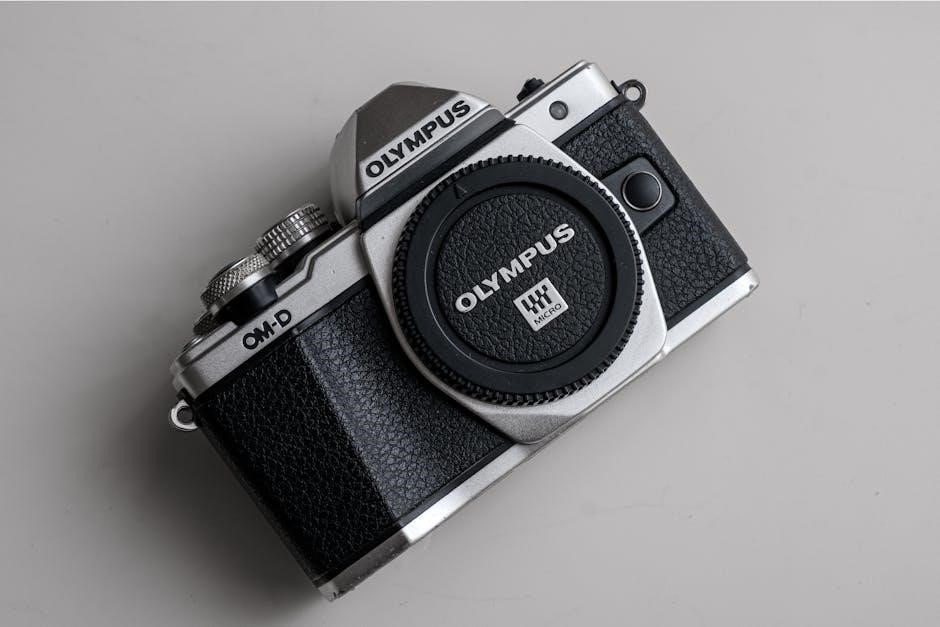
The touchscreen interface further simplifies navigation, enabling direct selection and adjustment of parameters. Button-based control is also available, offering an alternative for those preferring tactile input. Understanding the menu layout is key to mastering the OM-1’s extensive features.
Customization Options: Tailoring the Camera to Your Needs
The OM-1 excels in its adaptability, offering extensive customization options to match individual shooting styles. Users can assign functions to buttons, tailoring the camera’s controls for rapid access to frequently used features. This personalization significantly enhances operational efficiency.
Beyond button assignments, the ‘My Menu’ system allows for the creation of bespoke menus containing preferred settings. This feature streamlines workflow, eliminating the need to navigate through multiple layers of the standard menu structure. Custom shooting modes can also be created and saved.
Furthermore, the OM-1 permits fine-tuning of autofocus and image stabilization parameters, enabling precise control over image capture. These adjustments, combined with customizable display options, allow photographers to optimize the camera for specific scenarios and creative visions.
Connectivity: Wi-Fi, Bluetooth, and Ports
The OM-1 provides a comprehensive suite of connectivity options for seamless data transfer and remote control. Integrated Wi-Fi enables instant image sharing to smartphones and tablets via the OM Image Share application, facilitating quick social media uploads and backups.
Bluetooth connectivity allows for a constant, low-power connection to mobile devices, enabling remote camera control and geotagging of images using the smartphone’s GPS. This is particularly useful for landscape and travel photography.
Physically, the camera features a USB Type-C port for fast data transfer and in-body charging. A micro HDMI port allows for video output to external monitors and recorders. The inclusion of these ports ensures compatibility with a wide range of accessories and workflows.
Understanding the Olympus OM-1’s Image Quality
The OM-1 delivers exceptional image quality, stemming from its advanced sensor and image processing engine. Expect highly detailed images with excellent dynamic range, even in challenging lighting conditions. The camera excels at capturing subtle textures and natural colors, providing a pleasing aesthetic straight out of the camera.
Low-light performance is notably strong, thanks to the combination of the sensor’s design and the powerful image stabilization system. This allows for handheld shooting at slower shutter speeds without significant blurring. Noise is well-controlled at higher ISO settings, preserving detail and clarity.
The OM-1’s image quality is further enhanced by its color science, which produces vibrant and accurate colors. Users have extensive control over color profiles and white balance settings to fine-tune the look of their images.
RAW vs. JPEG: Choosing the Right Format
The Olympus OM-1 offers both RAW and JPEG shooting options, each catering to different needs. JPEGs are compressed files, ready for immediate use and sharing, requiring no post-processing. They are convenient for everyday photography and situations where quick turnaround is essential.
However, RAW files contain unprocessed data directly from the sensor, offering significantly greater flexibility in post-production. This allows for extensive adjustments to exposure, white balance, and color without sacrificing image quality. RAW files are ideal for critical work where maximum control is desired.
Choosing between RAW and JPEG depends on your workflow and priorities. If you prioritize convenience and immediate results, JPEG is suitable. For maximum image quality and editing potential, RAW is the preferred choice. The OM-1’s high dynamic range benefits greatly from RAW processing.
White Balance and Color Profiles
The Olympus OM-1 provides comprehensive control over white balance and color rendition. Automatic White Balance (AWB) generally performs well in various lighting conditions, but custom settings offer greater precision. Users can select from presets like Daylight, Cloudy, Shade, and Tungsten, or manually input a Kelvin temperature for ultimate accuracy.
Beyond basic white balance, the OM-1 features several color profiles, including Natural, Vivid, and Monochrome. These profiles influence the overall look and feel of your images, offering creative options straight from the camera. Custom color profiles can also be created and saved for consistent results.
Understanding how white balance and color profiles interact is crucial for achieving desired aesthetics. RAW shooting allows for non-destructive adjustments to these settings in post-processing, providing maximum flexibility. Experimentation is key to mastering these features.
Troubleshooting Common Issues
Encountering problems? The OM-1, while robust, can occasionally present challenges. A common issue is slow autofocus in low light; ensure sufficient illumination or utilize the built-in focus assist lamp. If the camera freezes, a simple reset often resolves the problem – locate the reset button (consult the full manual for its precise location).
Image quality concerns often stem from incorrect settings. Verify ISO levels are appropriate for the lighting, and check for lens flare or dust on the sensor. Battery drain can be accelerated by frequent use of the LCD screen or image stabilization; adjust power saving settings accordingly.
For connectivity issues, confirm Bluetooth and Wi-Fi are enabled on both the camera and your device. Regularly check for firmware updates, as these often address bugs and improve performance. If problems persist, consult the OM Digital Solutions support website for detailed troubleshooting guides.
Battery Life and Power Management
Maximizing uptime with the OM-1 requires understanding its power consumption. Battery life is significantly impacted by frequent LCD screen use, image stabilization activation, and wireless connectivity. Utilizing the electronic viewfinder (EVF) generally consumes less power than the rear LCD.
The camera offers several power-saving features. Auto power off can be adjusted to conserve energy during inactivity. Consider enabling the “Sleep” mode for quicker wake-up times while still reducing drain. Shooting in RAW format demands more processing power, thus shortening battery life compared to JPEG capture.
It’s advisable to carry a spare, fully charged battery, especially during extended shoots. Avoid exposing the battery to extreme temperatures. Regularly check the battery indicator and consider investing in a dedicated battery charger for convenient recharging between adventures.
Firmware Updates: Keeping Your OM-1 Current
Maintaining optimal performance of your OM-1 relies on regularly updating its firmware. OM Digital Solutions frequently releases updates addressing bug fixes, enhancing compatibility, and introducing new features. These updates are crucial for ensuring a smooth and reliable shooting experience.
To check for updates, connect your OM-1 to a computer with the OM-D Connection software installed. The software will automatically detect available updates and guide you through the installation process. Always follow the on-screen instructions carefully during the update, and avoid interrupting the process.
Firmware updates can significantly improve autofocus performance, image quality, and overall system stability. Regularly visiting the OM Digital Solutions website for the latest firmware releases is highly recommended. Keeping your camera current ensures you benefit from the latest advancements and enjoy the best possible performance.
Accessories: Enhancing Your OM-1 Experience
Expanding the capabilities of your OM-1 is easily achieved through a range of dedicated accessories. OM Digital Solutions, and third-party manufacturers, offer a wealth of options to tailor the camera to your specific needs and shooting style.
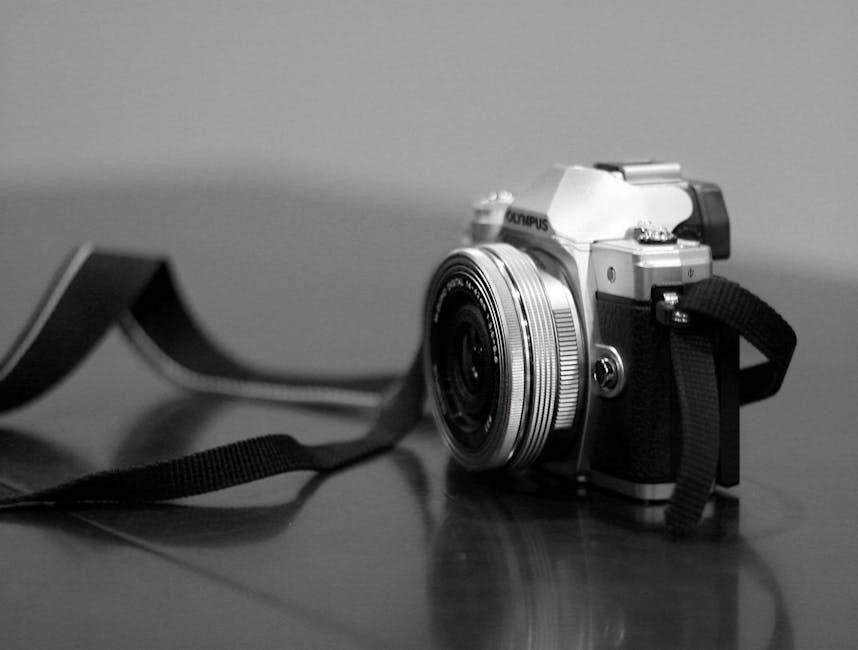
Essential accessories include additional batteries for extended shooting sessions, and high-capacity memory cards to accommodate large image and video files. A comfortable camera strap is also recommended for secure and convenient carrying. For challenging weather conditions, consider a waterproof housing to protect your investment.
Further enhancements include external flashes for improved lighting control, remote shutters for convenient operation, and specialized grips for enhanced ergonomics. Exploring the available accessories allows you to unlock the full potential of your OM-1 and elevate your photography to new heights.
Lenses Compatible with the OM-1 System
The Micro Four Thirds system boasts a remarkably extensive lens ecosystem, and the OM-1 is fully compatible with the vast majority of lenses designed for this standard. This includes both Olympus-branded lenses and those from other manufacturers like Panasonic, Sigma, and Laowa.
Olympus (now OM System) offers a range of premium lenses, from versatile zoom lenses to specialized primes, covering a wide spectrum of focal lengths and apertures. These lenses are renowned for their exceptional optical quality and compact size. Adapters are also available, allowing you to utilize lenses from other systems, expanding your creative possibilities even further.
Choosing the right lens is crucial for achieving your desired results. Consider factors like focal length, aperture, and image stabilization when selecting a lens for your OM-1. The compatibility and variety ensure a perfect match for any photographic endeavor.
Resources for Further Learning
Expanding your knowledge of the OM System OM-1 extends beyond this manual. OM Digital Solutions provides a wealth of online resources, including detailed tutorials, firmware updates, and a comprehensive FAQ section on their official website. These resources are invaluable for staying current with the camera’s capabilities.
Numerous online photography communities and forums dedicated to the Micro Four Thirds system offer a platform for sharing experiences, asking questions, and learning from fellow photographers. Websites like DPReview and Photography Life provide in-depth reviews, comparisons, and articles related to the OM-1 and its lenses.
YouTube channels specializing in photography often feature tutorials and reviews specifically tailored to the OM System cameras. Don’t hesitate to explore these avenues to unlock the full potential of your OM-1 and refine your photographic skills.